

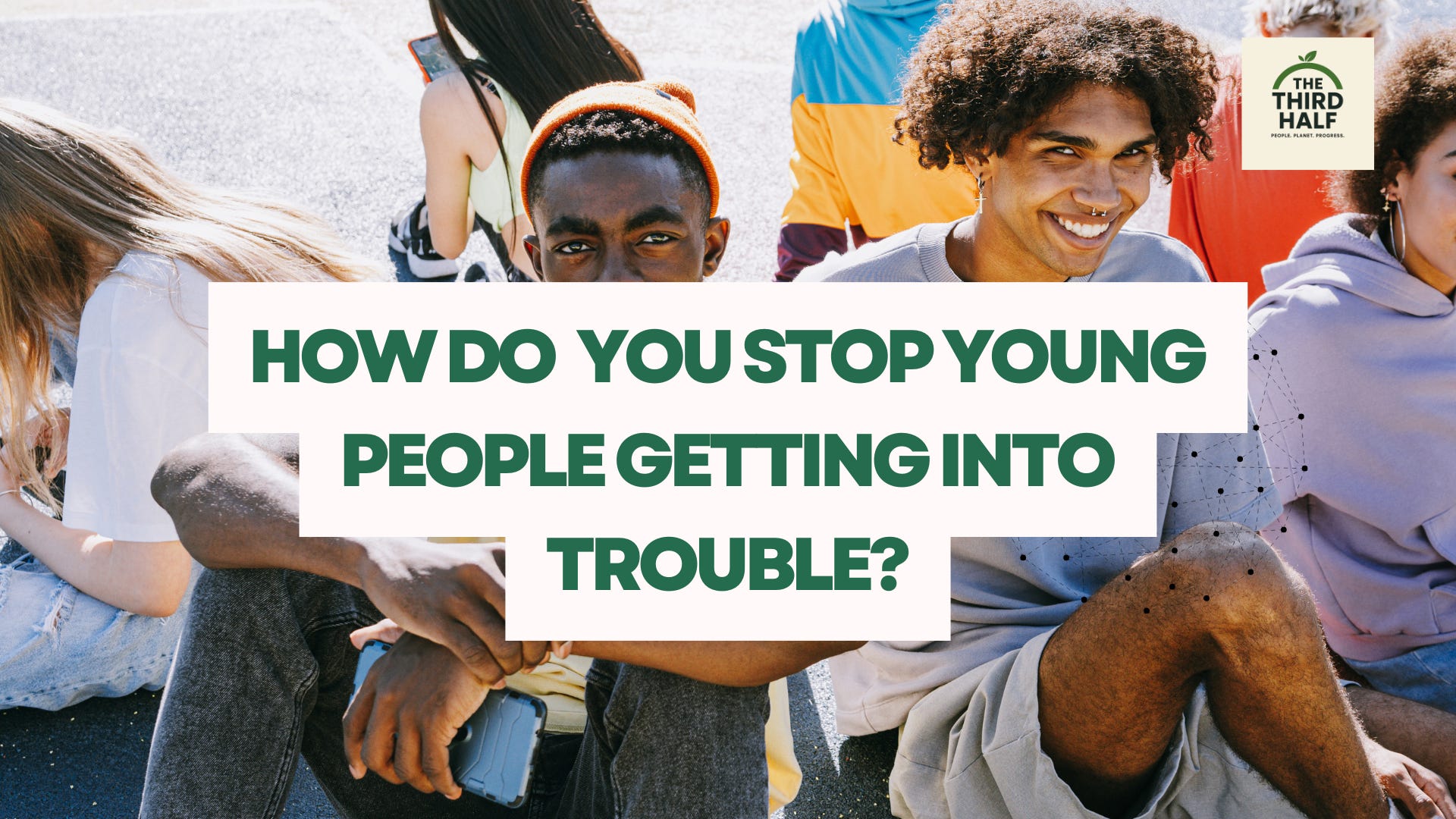
When I came across a recent Positive News article about community football helping young people stay out of trouble, I nearly skimmed past it as another feel-good story about football saving the world. Then I read it properly, and realised it wasn’t really about football at all. It was about belonging.
I saw a version of this myself last year. My Boycott Your Bed sleep-out was meant to happen at Hampden Park in Glasgow, but the storms put paid to that. Reading FC Community Trust had no involvement in the campaign at all, but when I got in touch, they kindly let me sleep out on their grounds instead. It wasn’t the discomfort of a night outdoors I remember most. It was a reminder of what clubs like Reading do for the people around them, week in, week out, long after anyone’s watching.
We’ve become very good at talking about the cost of youth crime, antisocial behaviour and poor mental health. We debate policing numbers, sentencing, school exclusions and social media. Important conversations, all of them. But perhaps we spend far less time talking about what young people are actually saying yes to. Very few teenagers wake up wanting to get into trouble. Many simply don’t have anywhere better to be.
A floodlit football pitch on a Wednesday evening sounds almost laughably ordinary, until you realise what it represents. Someone expected you to turn up. Someone notices if you don’t. Someone knows your name, and you matter to a group. That isn’t just football. That’s community.
The sport itself almost becomes incidental. You could replace it with boxing, music, theatre, basketball, dance, gardening or coding. The activity matters, but the relationships matter more.
We often underestimate the extraordinary value of ordinary adults: coaches, volunteers, youth workers, the people who quietly give up two evenings a week because they believe young people deserve somewhere safe to grow. They’ll never make the front pages, and they’ll probably never receive an honour, yet they are preventing problems that society later spends millions trying to fix.
It’s an odd economic model. We’ll happily fund the consequences. We struggle to fund the prevention, perhaps because prevention is wonderfully invisible. You can’t easily measure the fight that never happened, the arrest that never took place, the addiction that never developed, the life that quietly took a different path. None of these make headlines.
Sir Anthony Seldon has spent years arguing that wellbeing needs to be treated as seriously as attainment, not as an add-on but as the foundation everything else is built on. It’s a case he made about education and society more broadly when he joined me on TTH last month, but it holds just as well on a Wednesday evening five-a-side pitch. Community football makes that argument without needing a single slide or statistic. It just turns up, every week, and lets young people belong to something.
What I found myself thinking about afterwards was how community football increasingly looks like everything many people say they miss about professional football. It’s local, inclusive, affordable, multicultural, less interested in winning at all costs and more interested in making sure everyone has somewhere to play. The real victory isn’t lifting a trophy. It’s turning up again next week.
I’ve been writing a lot recently about purpose, community and what holds us together. Whether it’s social enterprises, local food projects, music festivals, environmental groups or grassroots sport, I keep coming back to the same conclusion: people don’t flourish because someone tells them to make better choices. They flourish because they find somewhere they belong. Football just happens to be one of the oldest and simplest ways we’ve ever invented of making that happen.
It’s why I’m looking forward to speaking with Heather Manson from Street Soccer Scotland soon. A charity built by someone who lived through homelessness himself, using the same idea on a bigger scale: give people somewhere to belong, and everything else starts to follow.
Perhaps the question was never how do we stop young people getting into trouble. Perhaps it was always how do we create more places where they feel they belong.