

(Or: what it means when sensible people start hoarding Heinz)
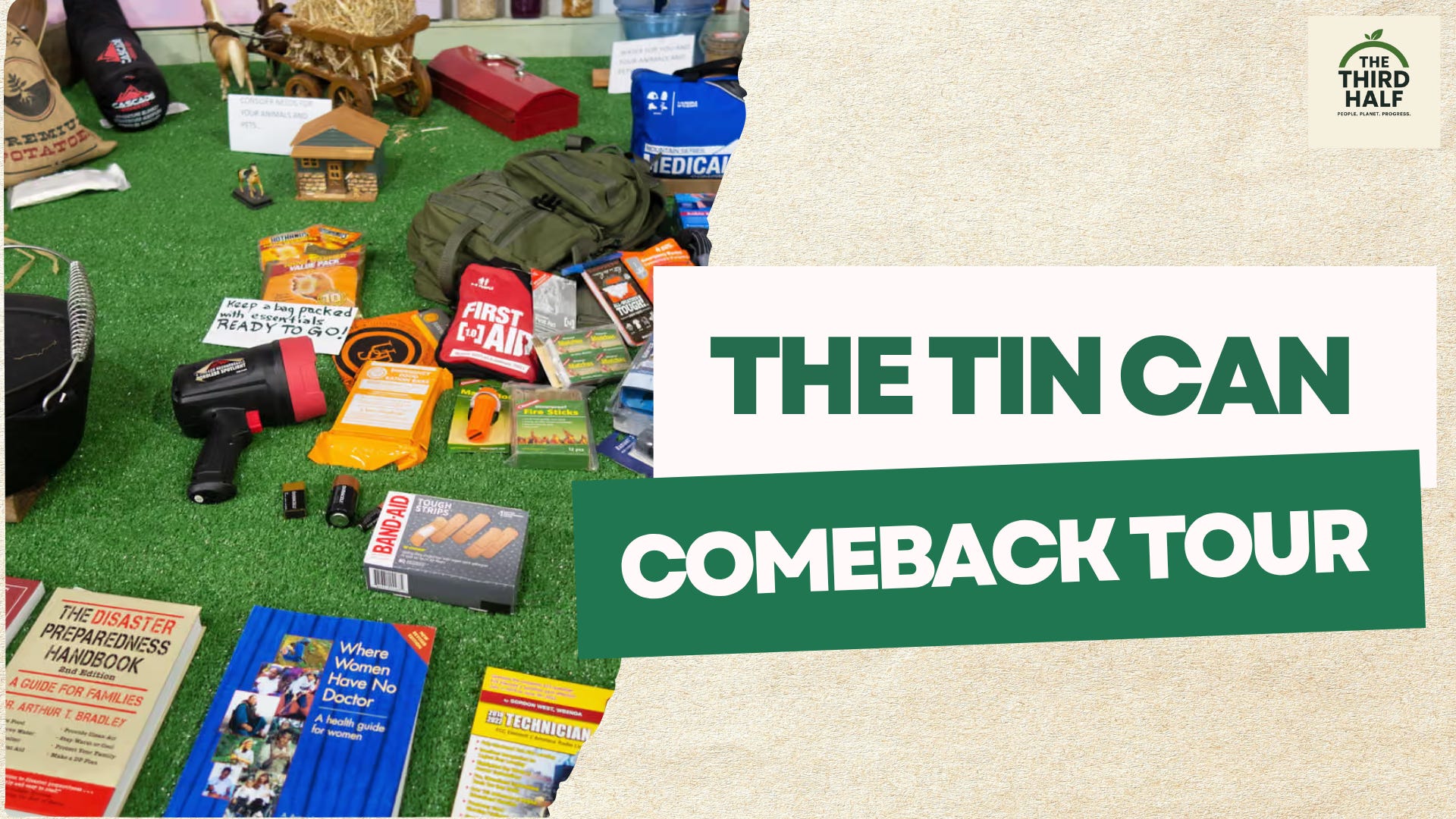
Nearly half of Britons now have a stockpile of tinned goods at home. Seventeen percent have a dedicated cash stash, hidden somewhere domestic and deliberate, probably behind the good towels. The national emergency plan has quietly become a camping stove, an analogue radio and a tin of peaches in syrup. Welcome to 2026.
I was sitting on my previously documented stationary train the other night, going nowhere, chewing on biltong and wondering in a vaguely philosophical way whether this constituted my last supper, when I noticed people on the tracks below with actual suitcases, walking. Not in a film. On a Thursday evening in Britain, because the infrastructure had simply decided it was done for the day and everyone was adapting with that particular brand of grim cheerfulness that suggests we have been here before and expected nothing less.
We have, of course, been here before. Cast your mind back to 1999, when we were all absolutely certain that computers would fail at midnight and civilisation would reboot itself into something unrecognisable. Millions stockpiled food and cash, then woke up on January 1st with a hangover and an embarrassing quantity of tinned soup to work through. The Y2K bug turned out to be less apocalypse and more administrative inconvenience, and yet here we are again a quarter of a century later, making a considered trip to Argos for a wind-up torch and feeling entirely reasonable about it.
The survey behind all this was run by Link, the UK’s ATM network, who have apparently decided their brief extends to tracking civilisational anxiety alongside cash machine usage. What they found is that nearly half of us have battery-powered torches ready, more than a third keep a power bank in the house, one in five has a portable gas hob and fifteen percent have acquired an analogue radio in the year of our Lord 2026. The government’s own Prepare website, which is a real thing that exists and which someone in Whitehall had to write with a straight face, advises citizens to stock tinned food, bottled water and a first aid kit. The state is essentially encouraging the nation to treat its home like a particularly cautious campervan.
What stays with me is the twenty-three percent who did all of this within the last three months. Something shifted for them recently, some accumulation of headlines and power cuts and stationary trains that tipped the background hum of unease into a concrete decision to actually do something about it.
Here is where I connect it to the Third Half, because that is what I do. The people in this generation who have come through a significant career transition already understand something important about systems failing without warning. They have watched their own infrastructure go down. The diary that used to fill itself. The status that travelled with the job title and evaporated the day it was removed. The phone that rang because of the role rather than the person. When those structures dissolve, the ones who navigate it best are rarely the ones who assumed continuity was guaranteed. They are the ones who had thought about what was genuinely essential versus what they had simply been borrowing from an institution that turned out to be less permanent than it looked. A tin of Heinz beans behind the good towels is, viewed in a certain light, a perfectly coherent philosophy.
The people walking along those tracks were not panicking. They had somewhere to be and they went, quietly determined and slightly absurd in the best possible British way, and almost certainly better prepared for the next disruption than the people still sitting on the train waiting for an announcement that was never coming.
Stock the tins. Keep some cash. And maybe ask the question the Third Half always circles back to: what did you actually need, and what were you just assuming would always be there?
The film is still going. We are well past the opening credits.
People. Planet. Progress.
Ha. Good one. Remember clearing out my parents house and a can of peaches from 1973 was proudly there. The clear-out happened in 2023 🤣🤣