

I could recite the entire Cheese Shop sketch by Monty Python by the age of twelve. Word for word. Every variety. Every increasingly desperate request. Every beautifully deadpan refusal.
I performed it on stage. I was not asked back.
This is I think the origin story of everything.
So when a piece about cheese facts landed in front of me this week I did what any reasonable person would do. I cancelled what I was doing and read it twice.
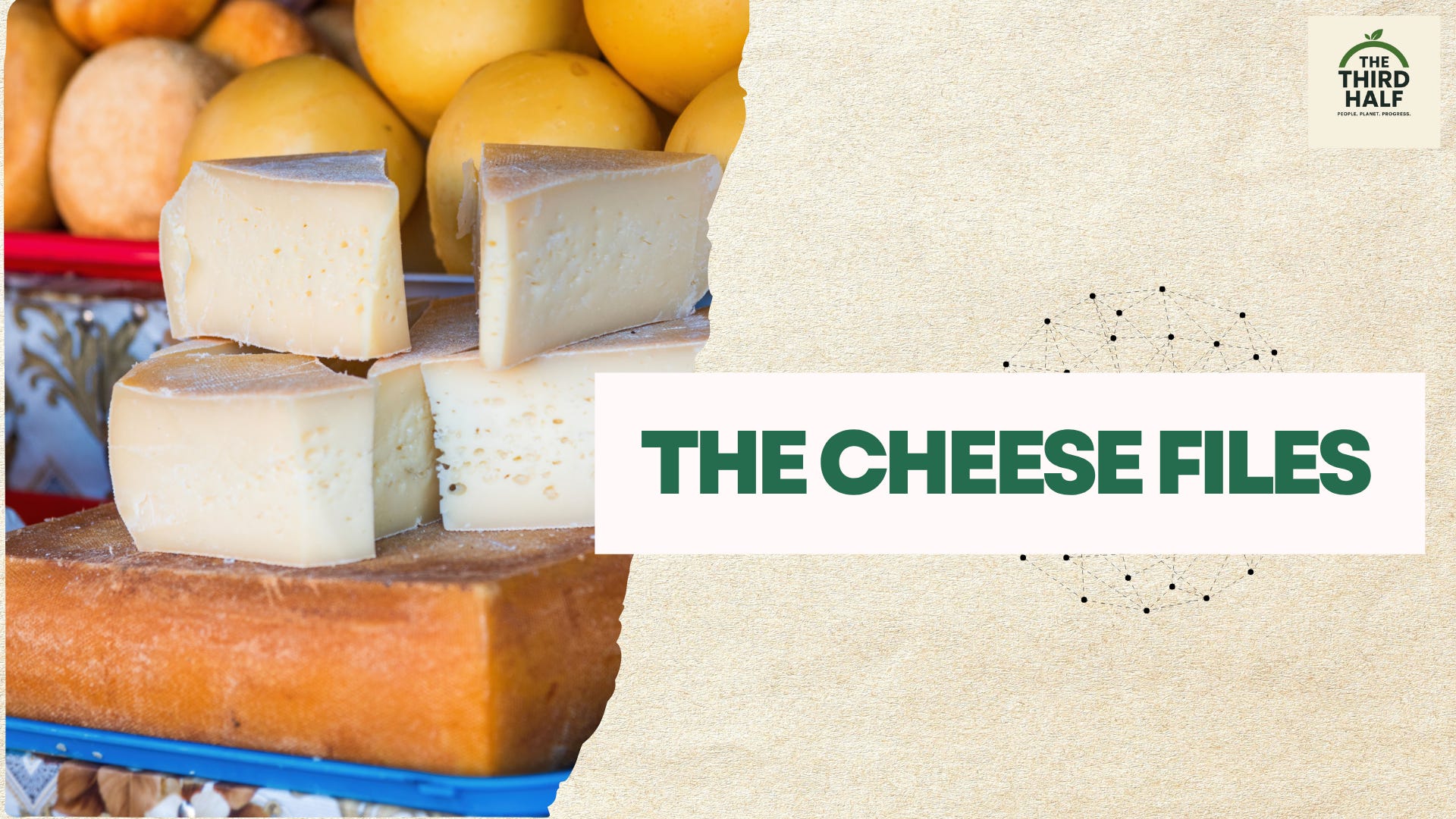
Here’s the thing about cheese. It is one of humanity’s oldest foods and after nearly four thousand years of making it we still don’t actually know why Swiss cheese has holes. The leading theory involves bacteria releasing gas as the cheese matures. A more recent study suggests tiny particles of hay in the milk might be responsible. Nobody is sure. I find this genuinely wonderful. We can sequence the human genome and land a rover on Mars but the Emmental remains a mystery.
It is also the most stolen food on the planet. Not jewellery. Not cash. Cheese. Around four percent of global supply disappears every year and the black market for it is thriving. In Italy Parmesan is so valuable it is accepted as loan collateral by actual banks. Between 2014 and 2016 organised crime stole roughly seven million dollars worth of it. In New Zealand two men once led police on a high speed car chase and attempted to throw off pursuit by hurling boxes of cheddar out of the window. I have read this several times. It remains one of my favourite sentences.
Medieval England had a tradition I’d genuinely like to revive. When a child was born the father would buy a large wheel of cheese hollow it out and pass pieces to everyone present at the birth. At the christening the baby was passed through the wheel for luck. I’ve attended some memorable christenings over the years. None involved structural dairy. I feel this is a gap in modern ceremony.
And then there is the music experiment. In 2018 Swiss researchers took nine wheels of Emmental and played them different music continuously for six months. Mozart. Led Zeppelin. A Tribe Called Quest. When food technologists later assessed the results the hip-hop cheese had developed a stronger smell and a fruitier more complex taste than every other sample including the control.
I have been sitting with this information for a few hours now.
Because there is something in it that goes well beyond cheese. The idea that what surrounds something during its formation shapes what it eventually becomes. The environment. The energy. The noise in the room. We talk about this all the time on The Third Half without ever quite putting it that way. The careers that surprise people. The late bloomers. The ones who came alive after the big job ended. So much of it traces back to what they were absorbing when nobody was watching.
What were you listening to when you became who you are?
Maybe it was Mozart. Maybe it was Zeppelin.
Maybe like the best of us it was Madchester
Living in SW France, it’s impossible not to smile at any serious discussion of cheese, they really do take it to heart here. The whole country does, in fact, with well over a thousand recognised varieties, each with its own story, terroir and fiercely defended identity.
It becomes even more personal in my case: I’m married to someone from Franche-Comté, the home of Comté cheese. There, anything aged less than 12 months is casually dismissed as “cooking cheese,” and teenagers doing work experience in a fromagerie isn’t unusual - it’s practically a rite of passage. Cheese isn’t just food; it’s culture, pride, and continuity.
All of which is to say: articles like yours are a pleasure to read. They capture something universal—the quiet joy, curiosity, and delight that cheese brings, no matter where you are.