

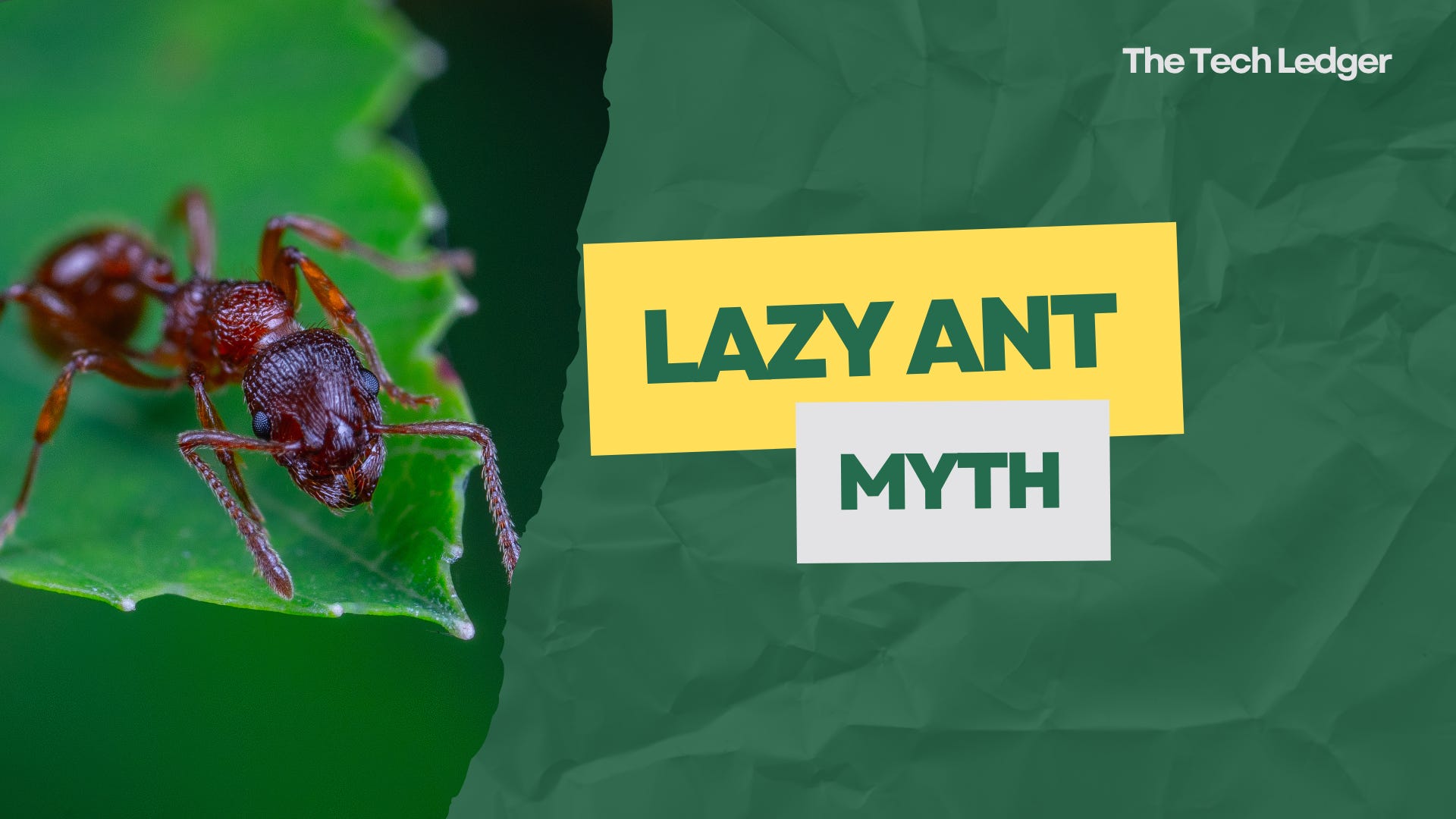
Ants have always had a good press. Industrious, organised, a safe bet in any fable when you need a moral about hard work. The grasshopper fiddles, the ants graft, and when winter comes the ants are smugly stocked up while the grasshopper starves.
Except it isn’t true.
Researchers have found that as many as 40% of worker ants aren’t working at all. No digging, no hauling, no food gathering. Just loitering. In ant terms: skiving. ScienceDaily
But when the “proper” workers were removed, the idle ants suddenly stepped in. The loafers were actually a reserve force, keeping the colony resilient.
Sound familiar? In human workplaces we’ve all seen the same dynamic:
The people who always look busy, head down, never off Whatsapp.
The ones who seem less visible… until something breaks, and suddenly they’re the ones who sort it.
And the “bench strength” you don’t notice until half the team is off sick.
Fire ants offer another lesson. Only 30% of them dig at once, which is actually more efficient. Too many workers in a tunnel and you get a jam. A reminder that piling in more people, more meetings, or more committees rarely speeds things up.
And then there are the ants of Southeast Asia who literally explode themselves when the colony is threatened. The “yellow goo” ants burst, spraying toxic gunk on intruders. Extreme, yes — but it does put into perspective the kind of “going above and beyond” many companies quietly expect of staff.
So, the next time you’re in a meeting wondering why some colleagues look busy while others look idle, spare a thought for the ants. Productivity isn’t always about constant motion. Sometimes it’s about knowing when to wait, when to step in — and when not to explode.
Numbers Don’t Lie
Average length of an ant: 0.08–1 inch
Known ant species: 12,000+
Oldest fossilised ants (New Jersey): 92 million years
Estimated ants alive today: 20 quadrillion