

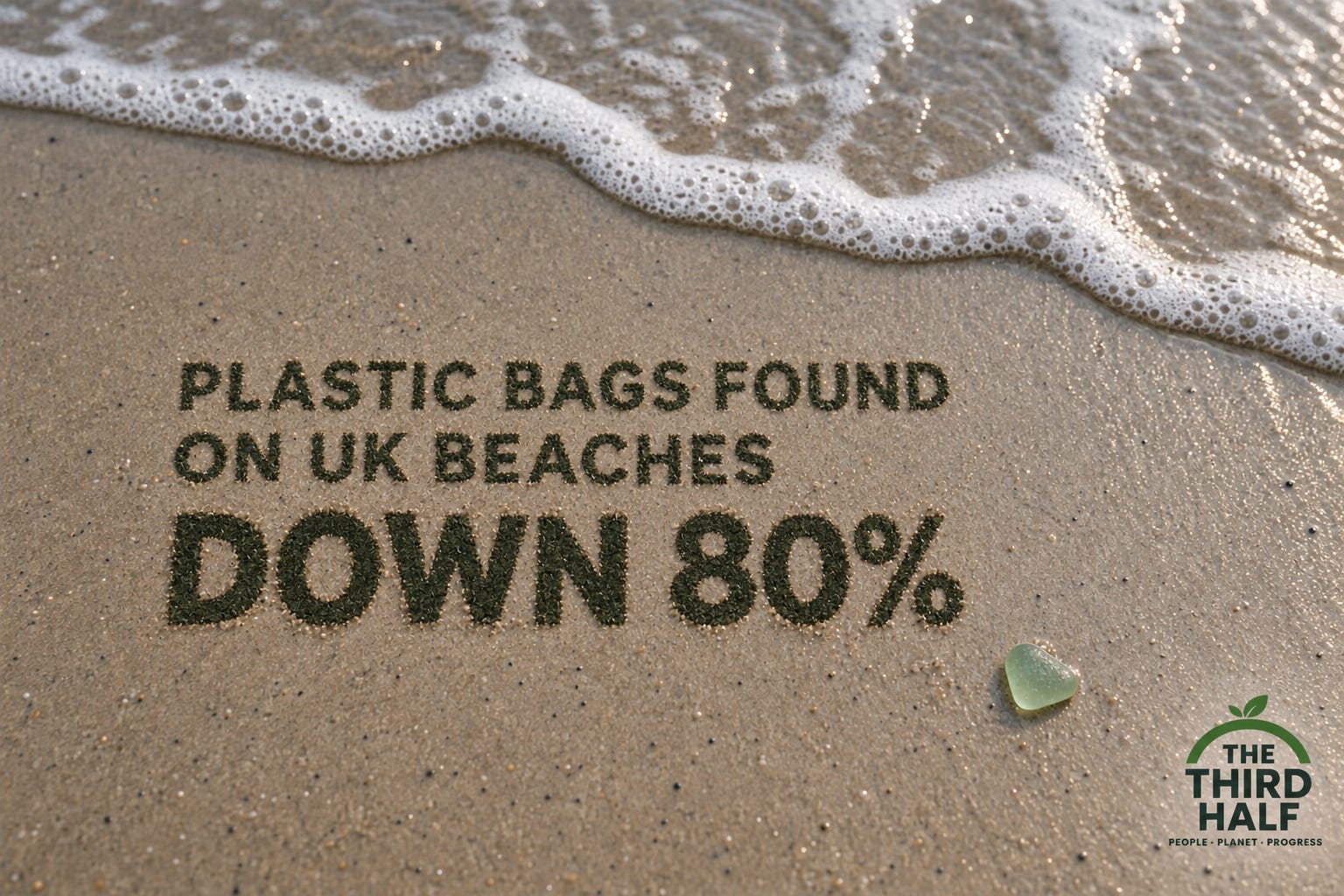
Great environmental news. Actual proper great news. No asterisk, no complicated graph showing that it is only technically good news if you stand on one leg and ignore North Lanarkshire.
As reported by Positive News, in 2014, volunteers working with the Marine Conservation Society found an average of five carrier bags for every 100 metres of UK coastline surveyed. That has fallen by 80% over the past decade.
Five becoming one. That is worth celebrating.
It appears that the humble plastic-bag charge worked. Five pence at first, later ten. A small enough sum to be almost inconsequential, yet apparently sufficient to make millions of us think: “I’m not paying that. There are fourteen bags for life breeding in the boot of the car.”
And so our behaviour changed.
Not perfectly, obviously. Many British homes now contain a cupboard which, if opened carelessly, releases enough reusable bags to bury a medium-sized Labrador. But fewer single-use bags are being taken from shops and far fewer are ending up on our beaches.
That matters.
I have recently bought my daughters jewellery made from pieces of sea glass found washed up on the shore. There is something lovely about it: an object once discarded, softened and reshaped by years in the water, then found and made beautiful again.
Beach glass, yes. Beach bags, rather less charming.
This 80% fall is encouraging because it shows what can happen when sensible policy meets ordinary human behaviour. Nobody was asked to become a full-time environmental activist. We were simply given a small reason to stop taking a new bag every time we bought milk and a packet of crisps.
One person remembering a shopping bag changes very little. Millions of people doing it, week after week and year after year, changes a coastline.
Progress often happens like that. Quietly, cumulatively and without a grand launch event featuring a minister in a hard hat.
There is more to do, of course. Bottles, cans, lids and other single-use waste are still found across our shores. And dog-shit (that does drive nuts). But perhaps we can resist our peculiar urge to greet every piece of good news with an immediate list of reasons not to feel good about it.
This policy worked! People changed and now the beaches have become a little cleaner. Yay!!!
At The Third Half, we often talk about the fact that growth, contribution and reinvention do not suddenly stop. That applies to societies as much as individuals. We can learn, change our habits, repair some of the damage. Un-f*** some of the things we f***ed up (as one of my sea glass jewellery wearing daughter’s once challenged me to do).
Sometimes the evidence is sitting in a report.
Sometimes it is a piece of sea glass made into a necklace.
And sometimes it is simply the plastic bag that is no longer there.
Source: